Choosing a Ladies Concealed-Carry Firearm
Among the considerations are gun type, caliber, size, and grip. Here's a guide to help you get the g
Mia Anstine
• 7 min read
“Which handgun should I purchase?” is the primary question asked by women new to concealed carry (CC). A lot goes into choosing a firearm, so the answer isn't always easy. Below you'll find the criteria to start making a wise handgun purchase.
As the journey to find the ideal CC gun begins, you must know that you are not alone. According to the National Shooting Sports Foundation (NSSF), at least 5.4 million first-timers purchased firearms in 2021. Something to contemplate is, “How many of those new-gun owners are satisfied with their purchases and training with the tool?” So, let's work to make you happy with your investment.
Considerations
When choosing your first CC handgun, there are many considerations. The most basic of these is that of mechanics:
Revolver vs. semi-automatic
Experienced firearms owners will tell you that they like revolvers because there’s less chance of malfunction compared to semi-autos; however, don’t get caught up on that point. Those who prefer semi-automatic handguns will tell you that they like them because of their capability to hold more ammunition than revolvers (depending on the make of the gun). Note that higher-capacity magazines fit into larger grips, thus affecting concealability.
Grip
Revolvers with smaller grips take a lot of practice to attain a confident handhold. You also need to practice intensely with the semi-automatic to maneuver the slide proficiently. Be sure to take at least a basic handgun class before making the big decision about your CC gun. Then, test the grip in the shop to see how it feels in your hand.
Operation
Test the operation of the revolver’s cylinder or the pistol’s slide and hold-open capabilities. Ask if you may dry-fire in the shop. If allowed, make sure the muzzle is pointed in a safe direction before placing your finger on the trigger. Squeeze; feel the slack; feel the weight of the pull when it breaks over; feel it when it reaches the back end; slowly release and feel it reset. Go through this process with multiple handguns so you have a point of comparison.
Due to variations in the size and strengths of women’s hands, some like a long trigger pull, larger grip, or lighter springs in the slide.
“Comfort, fit, and the ability to shoot consistently” are essential considerations for United States Concealed Carry Association (USCCA) Concealed Carry and Home Defense Fundamentals instructor Laura Evans. Capacity is less of an issue as her state's laws are restrictive.
Caliber and Controllability
Choosing a larger caliber will increase stopping power when shooting a threat; smaller-caliber guns won't create as much ballistic damage when they hit the target. On the other hand, larger calibers may mean greater recoil and larger magazines. As you see, there will be trade-offs. You’ll need to decide what is important: size, stopping power, recoil management, and the ability to conceal the gun.
If possible, find a way to “test drive” the handgun so you can feel the recoil and mechanics before making your investment. Some gun stores have a shooting range where you can test fire a likely candidate. Others may have an arrangement with a local range in order to do this.
Comfort
“Comfort is my number-one consideration,” says concealed-carry holder Katie Riley. “Being comfortable with it in my hand, comfortable with my ability to shoot it, comfortable with the trade-off between physical size and the capacity it provides, comfortable with how it sits on my body.”
This is important. If you aren’t comfortable with your gun, you won’t train with it; and if you won’t train with it, you won’t gain the necessary expertise to be a confident, competent, and safe shooter.
Concealability
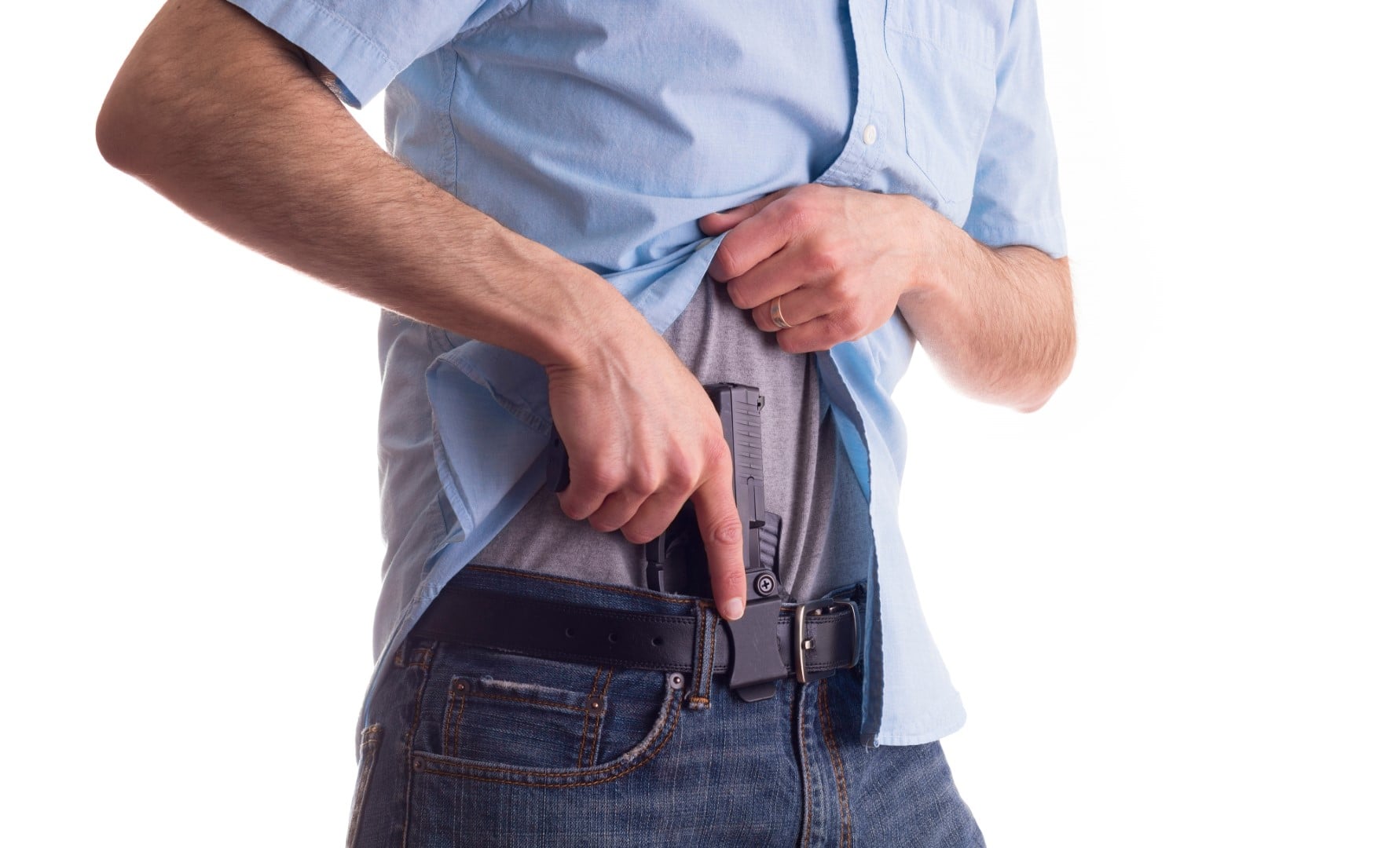
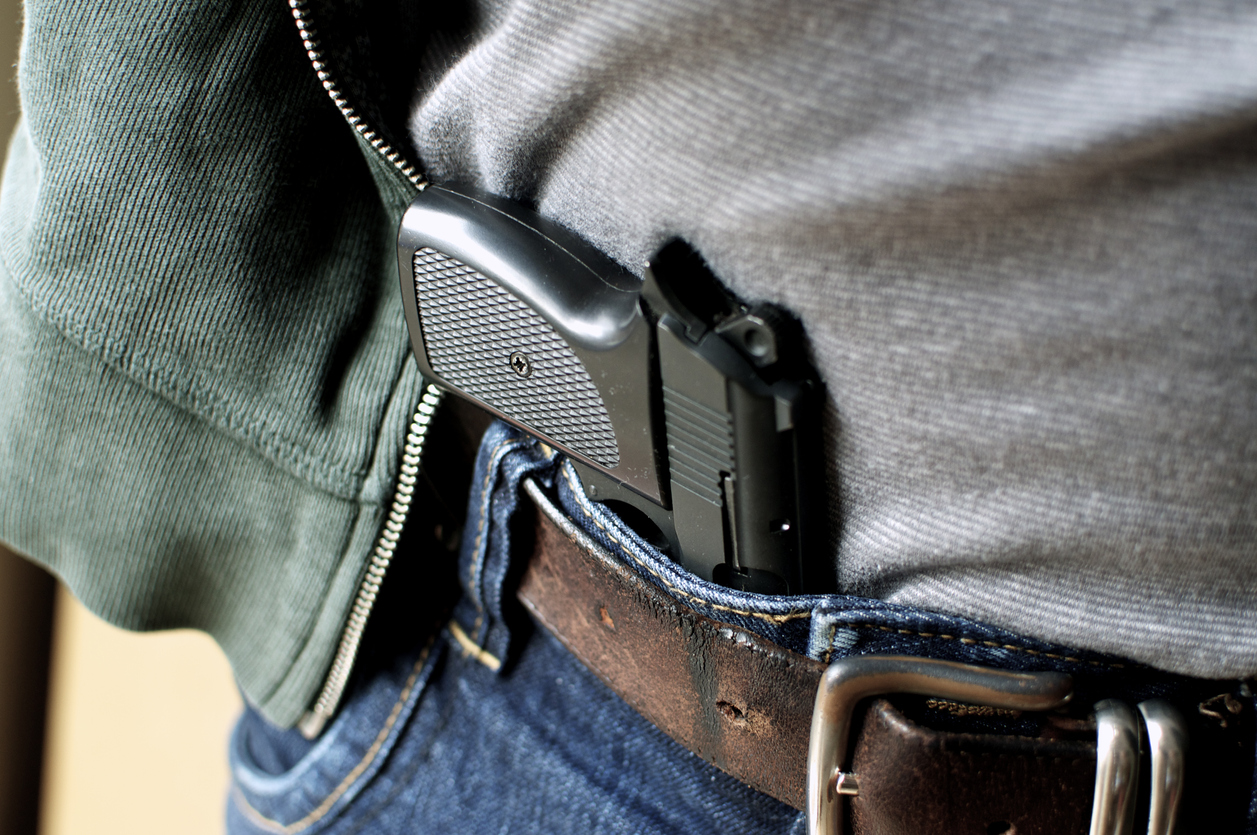
When looking for CC guns, most people try to find something small, so it's easier to hide. But as you've just learned, petite isn't always the best option. After you've decided on the gun, look to see what holsters are available for your pick.
Like shoes, find the one that fits you perfectly. Remember to look at firearms and concealed-carry laws in your state. Lastly, find concealed-carry classes in your area and practice often.
Conclusion
There is no one best answer when it comes to choosing a concealed-carry gun. Factors to consider include action (revolver or semi-auto), size, caliber, and grip. Above all, find a gun that fits you best, one you will be comfortable using.
FAQs
You don't know what you don't know, so it's important to ask questions. According to Armed and Feminine founder Kelly Ann Pidgeon, women who are new to concealed carry present “more questions about carrying rather than about the actual gun itself.”
Q: What gun do you carry?
A: I have several handguns that I carry based on my outfit. A few of my favorites are the Kimber K6s (357 Magnum), SIG Sauer P365 (9mm Luger), Remington RM380 (380 Auto), and Kimber Ultra Carry II (45 ACP), to name four. I have others as well.
Q: How do I safely carry my handgun?
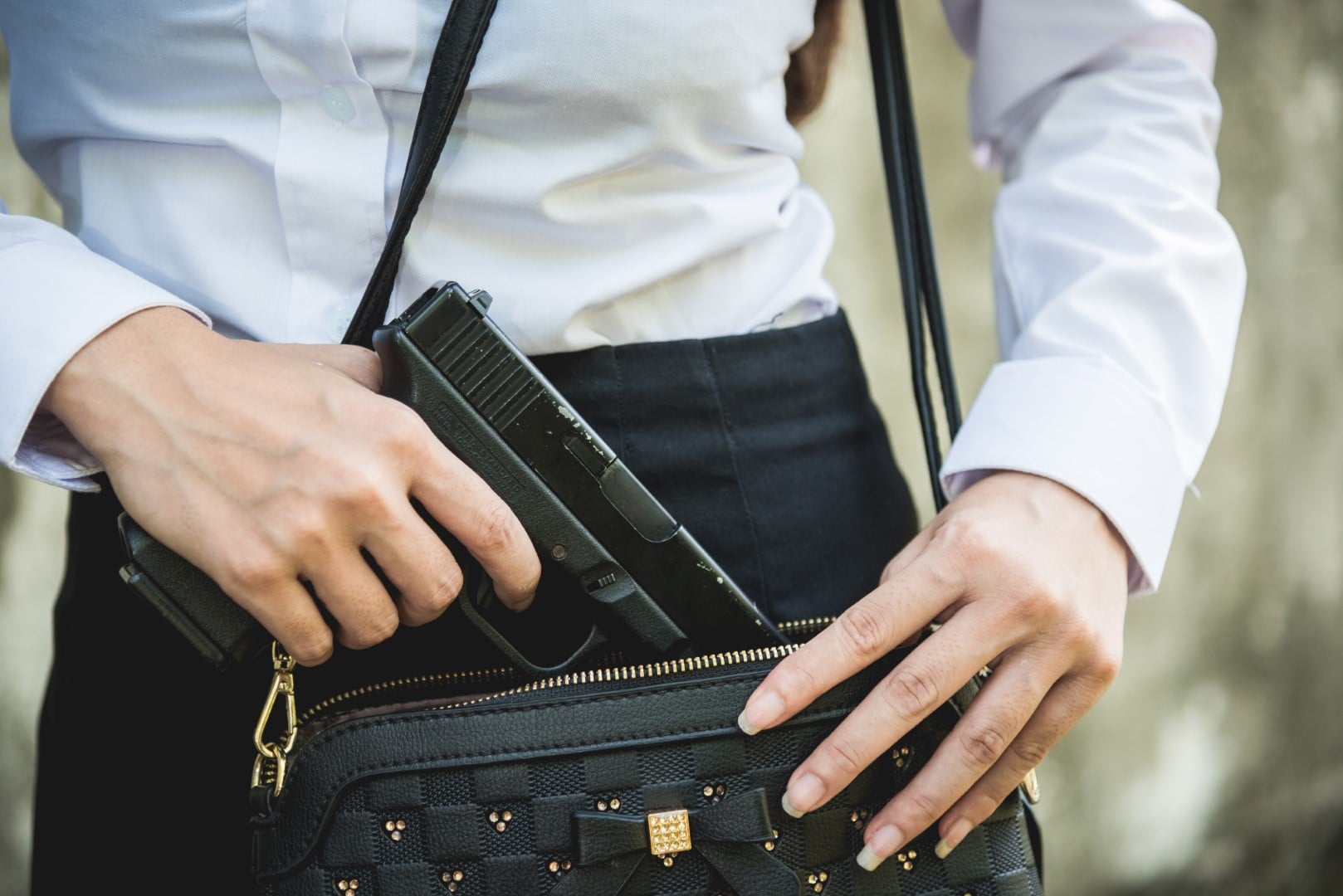
A: Take a concealed-carry class to learn how to draw from your favorite holster or handbag safely. If you carry in an off-body handbag, you need to be aware of where it is at all times.
Q: Where should I conceal it?
A: Conceal-carry options will vary depending on your body size, shape, and seasons as clothing layers change. Carry options are affected by your particular activity—work, social, workouts, etc. Regardless of your body type, there is a holster for you. For many, the best way to see which one works is to give it a try.