Choosing Ammo for a Self-Defense Handgun
The correct choice depends on many factors, but it’s actually simpler than you think
Travis Pike
• 9 min read

There is a lot to know when it comes to using a handgun for self-defense. From training to firearm selection, this knowledge is critical to successfully defending yourself. Choosing the right ammo for your handgun is a paramount concern, and the process can be confusing for a new shooter. A little bit of know-how will go a long way though, so I’m going to break it all down into an easy-to-follow tutorial.
Why Proper Self-Defense Ammo Is Important
Self-defense ammo is purpose-built to be as effective as possible when used in a self-defense situation. This involves a specialized projectile known as a hollow point or jacketed hollow point (see below for more details). High-quality self-defense ammo is designed to maximize reliability to ensure it will always fire when you pull the trigger.
Traditional ammo is called ball or full-metal jacket. It's best used for training purposes and is not advisable for self-defense. That’s because ball rounds can over-penetrate the target. When that happens, the bullet will continue on its path, resulting in the possibility of harming a bystander. These rounds also tend to create small holes in the threat and deliver very little in the way of threat-stopping damage. They are not a good choice when you need to stop a threat as quickly and efficiently as possible.
A properly designed round of defensive ammo is highly unlikely to over-penetrate. It's also more likely to stop a threat in as few rounds as possible, as long as the shooter can properly place their shots.
The best judge of penetration is properly calibrated 10 percent ballistic gel. The FBI ballistic standard is for a bullet to penetrate at least 12 inches of ballistic gel, but not more than 18 inches (to ensure the round will not over-penetrate). When you start shopping for ammo, it's a good idea to do some research to see how your potential choice performs.
Let’s say your gun is chambered for 9mm, a very popular self-defense round. Do an internet search (all you need to do is Google 9mm penetration results) to get an idea of the different brands that are available. Before you buy, though, you need to know that the length of the barrel of your gun can affect terminal performance. Here’s where a knowledgeable firearms dealer can help. Tell them what brand you’re interested in, then tell them the exact model and barrel length of your gun. They’ll help you select the best ammo for you.
Choosing the Right Projectile
Whatever brand you look at, keep in mind that the proper projectile for self-defense is a jacketed hollow point. A jacketed hollow point bullet has a hollow cavity in the center of the projectile. The jacket refers to the copper that surrounds what is often a lead projectile. This jacket helps ensure reliable feeding in semi-auto pistols.
The hollow cavity allows the round to expand. When it strikes a soft target, the hollow cavity fills, and this forces the projectile to open and expand. As it expands, the projectile grows in size and causes greater damage to the threat. These rounds also slow down when they hit the target, which prevents them from over-penetrating.
This is why you need a JHP round. Certain ammo types, such as frangible ammo, simply do not reliably penetrate deep enough to consistently stop the threat. Other ammo types often don't provide the same reliable penetration and expansion as a JHP.
Bullet Weight
When shopping for handgun ammo, you are going to come across a wide variety of bullet weights. This occurs with every caliber and can be very confusing. For example, if you start shopping for 9mm hollow points, you'll see three common weights—115-grain, 124-grain, and 147-grain—which might leave you asking which one is the best for self-defense.
Each one could be the right answer, but it really depends on your gun. Part of proper penetration and expansion depends on the velocity of the round. Heavier rounds move slower, and longer barrels help the rounds move faster. If you are going to fire a heavier round, it's often better to fire it from a longer barrel to ensure it reaches the right velocity to properly penetrate and expand.
Bullet weight can also have a slight effect on recoil. It can be almost imperceptible, but it may be something worth considering for those who are recoil-sensitive.
The Casing
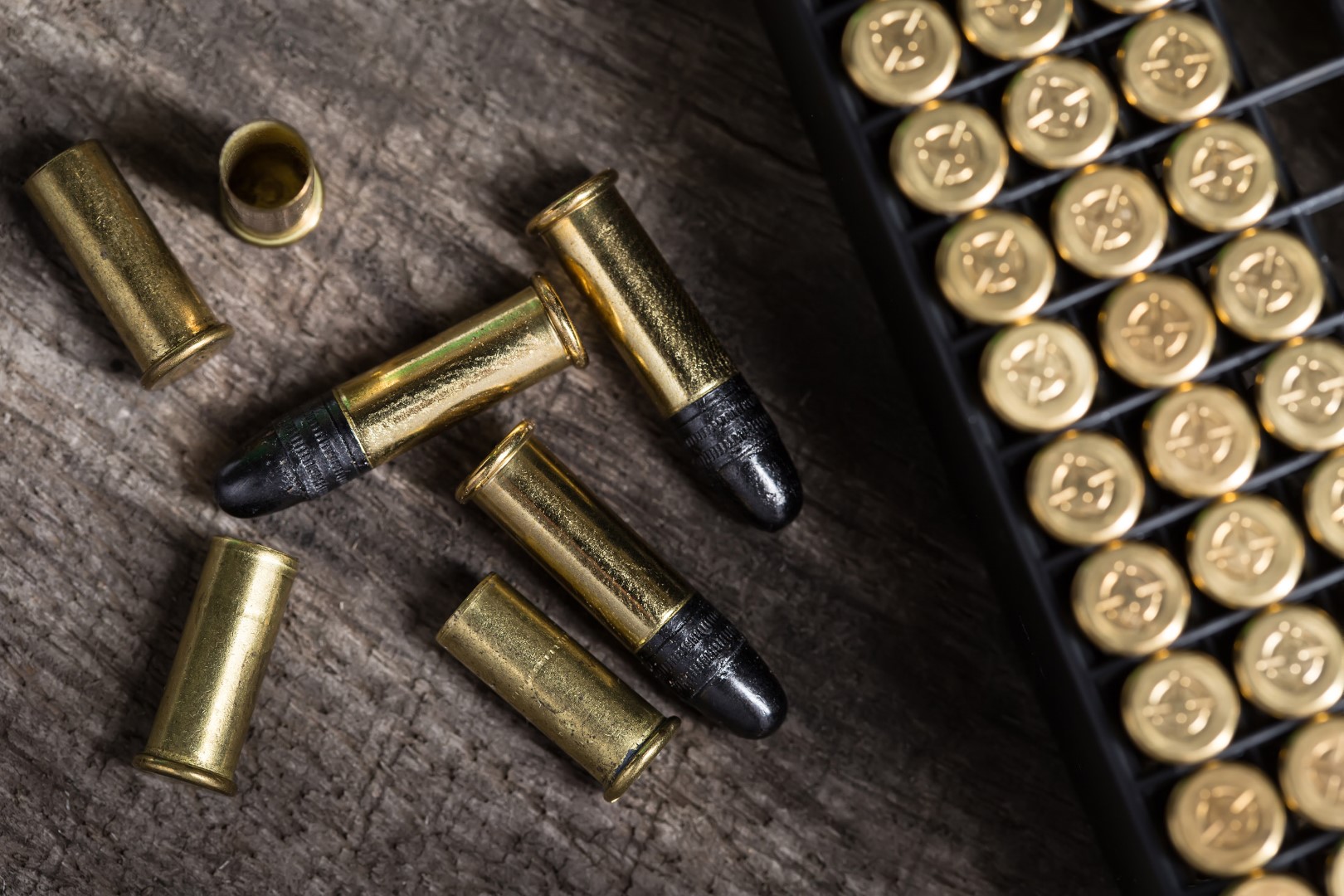
A brass casing is both the most common and the most desirable for self-defense ammunition. Brass cases also are the most reliable when it comes to feeding, extracting, and ejecting. They also expand upon being fired, which helps create a gas seal that maximizes the velocity of a round. The brass casing then contracts to allow for proper extraction and ejection.
One desirable but not necessary feature is a nickel-plated brass case. The nickel plating adds a layer of protection to the ammunition and helps prevent the tarnishing that is common with brass. Self-defense ammo is often carried in the gun for months at a time, and nickel plating helps protect from corrosion. The slick nature of such a coating also helps it feed in semi-autos and eject easier from a revolver.
The +P in Power
You may have seen self-defense ammo with a +P moniker attached to it. That +P means it’s “overpressure” ammo. In other words, it has a higher velocity. Such ammo can typically squeeze out another 100 feet per second when fired. As mentioned above, more velocity ensures consistent penetration and expansion as well as more striking energy.
That little extra oomph often results in a bit of snappy recoil, especially in smaller guns designed for concealed carry. That little extra power is a personal choice, and a +P load is not necessary for handgun self-defense ammo. Note: If you consider this ammo, make sure your gun is rated for +P ammo.
Conclusion
It doesn't take much to find good defensive ammo these days. There is admittedly a sea of it out there vying for your attention and purchase power. Just remember: A good defensive loading will have a jacketed hollow point with a brass case and be capable of penetrating at least 12 inches through properly calibrated ballistic gel. You should be able to control it, and it should achieve the velocity necessary to expand in a soft target. If you can remember that, then you're ready to dive in and find the right defensive ammo for your handgun.
FAQs
Q: Who makes the best defensive ammo?
A: Oh boy, that's a tough question. There are so many great companies out there producing high-quality defensive ammunition. Speer, Hornady, Federal, and SIG Sauer all produce high-quality defensive ammunition for various handguns. These are only a few of the great companies out there producing reliable ammo.
Q: Are semi-jacketed rounds good to go?
A: If you shoot a revolver, then semi-jacketed rounds are fine. But these rounds in a semi auto pistol are problematic as they can cause loading and ejecting issues. At any rate, this ammo is becoming rare. Most companies are now dedicated to full jackets for all defensive ammo.
Q: Aren't hollow point bullets illegal?
A: There was a lot of hubbub in the early 1990s regarding hollow point bullets, which were often erroneously portrayed as armor-piercing, cop-killing bullets. Nothing could be further from the truth. Hollow points are the gold standard for defensive ammunition and are legal almost everywhere. New Jersey, however, has enacted what is essentially a hollow point bullet ban, but it's one of the very few places that ban hollow point ammo.