Hearing and Eye Protection for Shooters
Most shooters know they need to protect their eyes and ears at the range, but how do you know your s
Brad Fitzpatrick
• 9 min read
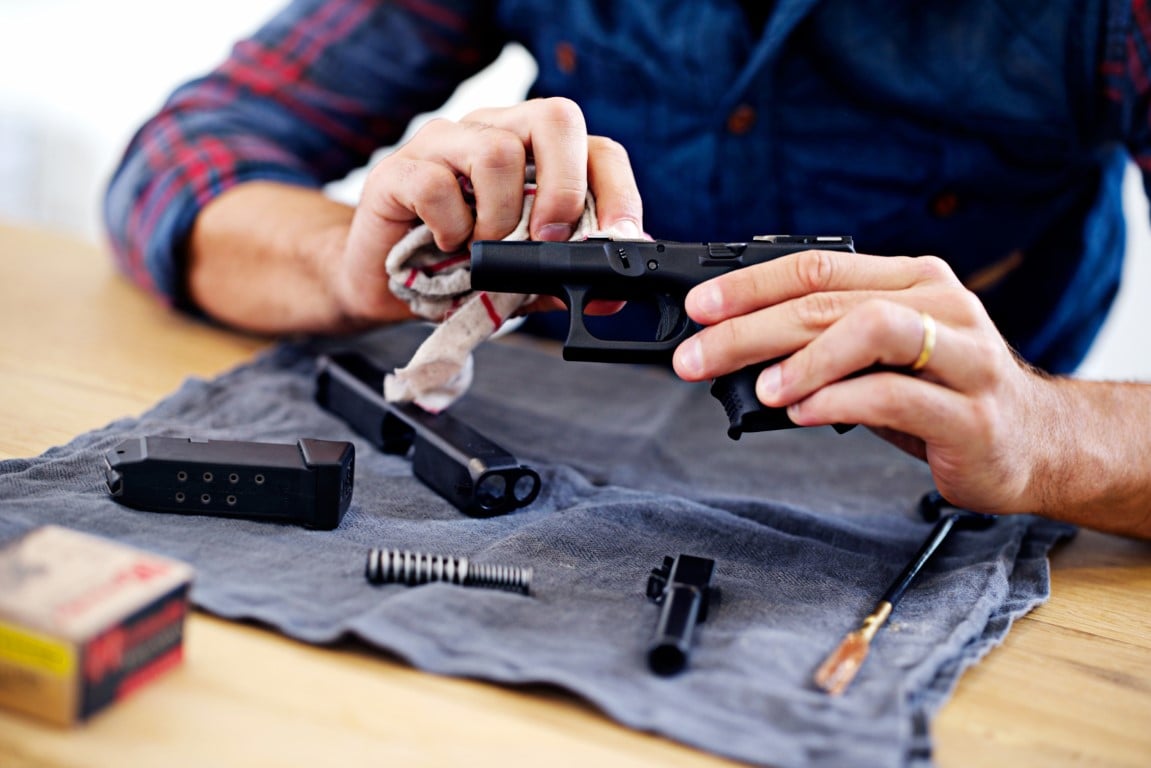
New gun owners have a great deal to learn before their first trip to the shooting range. Understanding the basic operation of the firearm is critically important, and matching ammunition to firearm can be a real challenge for someone who doesn’t know the difference between 9mm Luger and 9mm Luger +P ammunition or understand a .357 Magnum revolver can fire .38 Special ammunition, but a .38 Special can’t fire .357 Magnum ammo. Yet, one of the basic tenets of safe firearms handling—wearing hearing and eye protection—should be simple and straightforward even to those who’ve never owned a firearm.
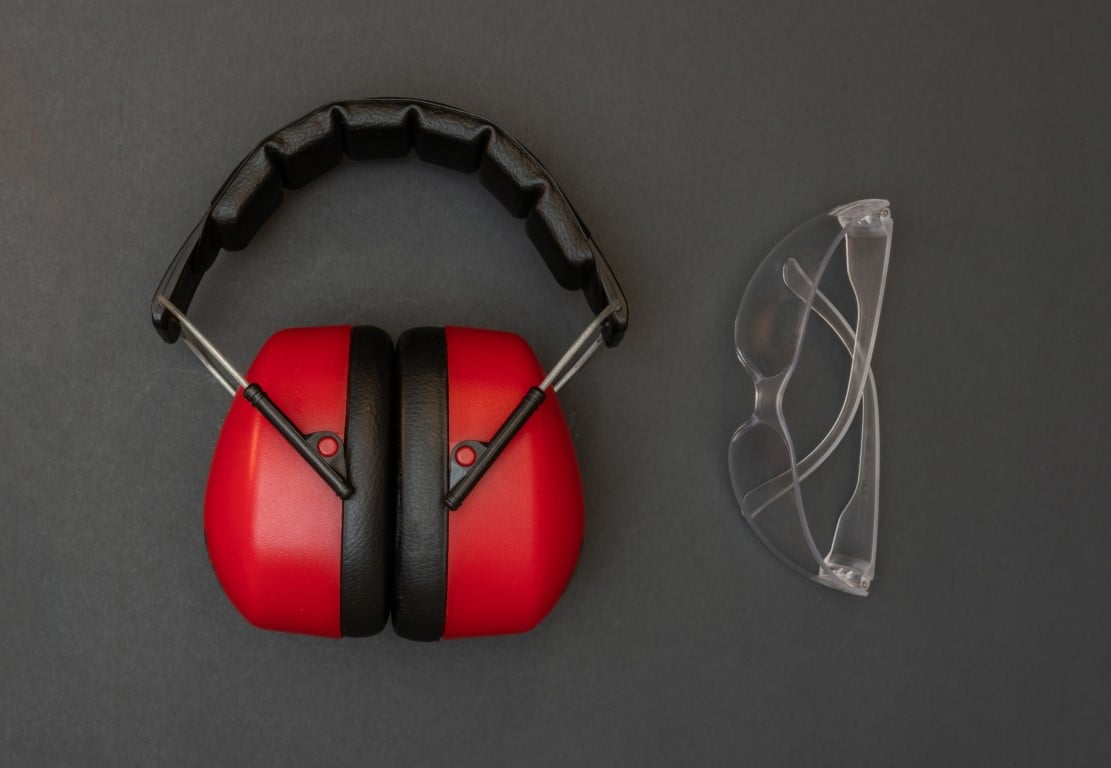
But there’s a catch: Not all hearing and eye protection is created equal. The earplugs you use to deaden the sound of hard-partying neighbors in a hotel may not provide adequate protection against the sound of gunshots, and your wraparound sunglasses may not be durable enough to stop an errant pellet at the shotgun range.
So, how do shooters know what to look for? Here’s a simple guide so that you can familiarize yourself with the basic vocabulary of hearing and eye protection to be certain that your gear is up to the task.
Eye Protection: ANSI Ratings
The American National Standards Institute is a nonprofit organization founded in 1918 to “administer and coordinate the U.S. voluntary standards and conformity assessment system.” ANSI doesn’t develop the standards for eyewear protection, but the ANSI rating of eyewear can help determine whether your glasses are suitable for shooting.
ANSI testing involves, among other things, high-mass impact and high-velocity impact testing. Safety glasses that are ANSI Z87.1 rated have been proven to withstand the impact of a 1-inch steel ball dropped onto the lenses from 50 inches. ANSI Z87+ ratings mean that the glasses have passed the standard impact test, plus additional tests that require the lenses to withstand high-velocity impact from smaller projectiles as well as other more rigorous tests.
For most shooting glasses, Z87.1 or Z87+ (sometimes written Z87.1+) is standard. However, there are also glasses that are designed to meet even more stringent military standards. Known as MIL-PRF 32432 or a ballistic fragmentation test, these glasses are subjected to impacts from a .15-inch projectile fired into the lenses at a speed of 640 feet per second. Only if the lenses can withstand this impact are they MILSPEC-certified. Oddly enough, even though MILSPEC standards require lenses to withstand impacts that are roughly seven times higher than the standards for ANSI Z87.1, there are some glasses that are MILSPEC-rated but don’t meet ANSI Z87.1 standards. Gatorz Eyewear Delta lenses are one example: Gatorz Delta lenses exceed MILSPEC ballistic fragmentation standards, but because of their partially open lens design (i.e., the lenses are not fully enclosed by the frame), they don’t meet ANSI standards.
It’s important to be certain that your shooting glasses meet ANSI and/or MILSPEC standards. Shooting glasses from most major eyewear brands, such as Leupold, Gatorz, Venture Gear, and Wiley-X, will list their rating, so there should be no problem identifying suitable products. These are all better options than standard non-rated sunglasses, which may fail to protect your eyes in the event of an accident.
Hearing Protection and Decibel Reduction
Decibels are the unit of measure for sounds, with zero dB considered absolute silence, while a 1 dB is barely audible. The term “decibel” actually refers to a tenth of a Bel, the unit of acoustic measure named after Alexander Graham Bell. Decibels are used to measure sound in place of bels because, in most cases, a sound change of 1 decibel is the smallest change in volume that the human ear can detect. An increase of just 3 decibels doubles sound energy, but to the human ear, sound “doubles” roughly every 10 decibels based on perception. Because decibel levels increase on a logarithmic scale, a 60 dB sound (average human speech) is not 60 times louder than a 1 dB sound, but rather 106 (1,000,000) times louder.
The human sense of hearing is remarkably complex. We hear sounds because sound waves travel through ear canal and vibrate bones that amplify the noise and send it to our cochlea, or inner ear. Fragile hairs inside the cochlea vibrate based on the sound frequency, but these hairs are susceptible to damage. Loud noises can cause hearing loss, and the rate and severity of that loss is a combination of the sound’s intensity in decibels and exposure time. Noises of 85 dB (equivalent to a noisy restaurant) or more can cause hearing damage after long hours of exposure. Higher dB sounds, such as a loud rock concert or fireworks (both of which can be in the 130 to 140 dB range), are instantly painful and damaging to the hearing.
Centerfire rifles, handguns, and shotguns are all capable of producing sounds in the 150 dB range, which is instantly painful and damaging, and even rimfire guns, such as the 22 Long Rifle, produce dB levels of 140 or more. For this reason, it’s important to always wear hearing protection while shooting a firearm, but how do you know which form of hearing protection to wear?
Soft foam earplugs are a common choice, and they do reduce dB and deaden sound. Foam earplugs are cheap, easy to use, and widely available, but they reduce the sound by only about 15 to 30 decibels if worn properly. Protective muffs typically drop sound levels by about the same 15 to 30 dB. In many cases, that’s enough reduction to reduce pain levels, but in the case of centerfire rifles (especially those with muzzle brakes), it’s not always enough to protect against hearing loss, so sometimes you’ll need to double up with muffs and earplugs if the sound is exceptionally loud. On rare occasions, even that won’t drop noise to comfortable levels: I recall shooting a magnum centerfire rifle with a brake underneath a metal overhang and found the noise to be unbearable, even when doubling up earplugs and muffs.
In most instances, such as shooting shotguns at the clay range or target shooting with a centerfire pistol, a high-quality pair of plugs or muffs are sufficient to bring gunshots down to safe hearing levels. There’s a new trend toward electronic hearing protection (either in the form of muffs or earplugs) to amplify safe sounds but block dangerous ones, so you won’t have to scream to communicate with other shooters but dangerously loud gunshot soundwaves are still blocked. One company—Tetra Hearing—has developed noise-cancelling earplugs that amplify certain frequencies of sounds that hunters want to hear, like turkey gobbles—a very clever add-on. The downside to electronic hearing protection, of course, is higher cost.
Regardless of which design you choose, it’s important to have effective hearing protection at the range. Hearing loss is a slow, progressive condition that, once begun, cannot be reversed, so it must be avoided.
Conclusion
You only have one set of eyes and ears, and medical science hasn’t advanced far enough to create viable replacement parts. An investment in quality eye and ear protection not only enhances the shooting experience, but helps ensure you will stay safe on the range and in the field.
FAQs
Q: How do I keep my shooting glasses from fogging up?
A: There are two options to prevent your lenses from fogging. First, you can increase airflow around the lenses, which reduces the temperature and allows moisture generated by the body to escape. Second, you can use anti-fog wipes or sprays, which are simple to apply.
Q: What color lenses should I get on my shooting glasses?
A: Traditionally, shooters choose glasses with yellow or orange lenses because they block blue light and make the orange color of targets stand out in contrast (amber lenses do the same thing). Purple or blue lenses improve contrast in areas with lots of green foliage. Gray is a great color choice for lenses, because it reduces light fatigue and maintains a consistent color balance.
Q: Are custom hearing protection products worth the money?
A: You can certainly get by with standard muffs and earplugs, but custom-molded hearing protection (which is designed to fit your specific ear canal) does have advantages, including increased comfort and greater sound reduction. Custom earplugs are more expensive, however.