The Right Range Bag for You, and What to Put in It
Range bags make your time at the range more productive. Choose wisely
Slaton L. White
• 5 min read
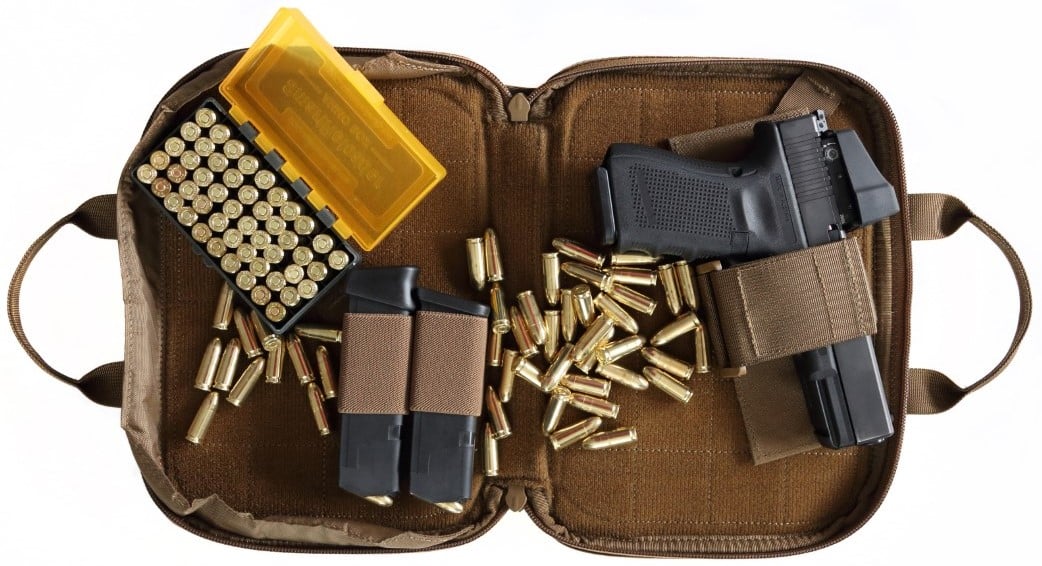
A good range bag allows you to enjoy a full day at the range, whether you're target shooting with a handgun, shooting sporting clays, zeroing-in a bolt-action rifle, or practicing for a 3-Gun competition with your AR. And just as there is really no one fly rod that can handle all fishing situations, I’ve learned that there is no one range bag that can handle all those applications. The solution, however, is easy: multiple range bags. If you’re just getting started and have very little gear, a small daypack is sufficient. But as you acquire more gear, you’ll need something larger. I’m going to provide some suggestions for you on range bag types and the gear that needs to be included, but it really is an individual choice based on your particular needs. Use this as a general guideline.
I typically shoot sporting clays, bolt-action rifles, and target handguns. Hard experience has taught me to create separate range bags for each discipline. Overkill? Not really. Going this route simplifies matters when I head out to my gun club. Instead of rummaging around the garage for assorted gear, I simply pull the bag (or bags, depending on what I intend to shoot on a given day) and stow it in my truck. Voilà! I’m ready to go.
The Bags
Range bags come in a variety of sizes and shapes. The inside may be a single open space, or it may be divided into separate chambers. These chambers may consist of adjustable, detachable panels that allow you to customize the interior storage space. Look for a bag that can easily accommodate all the gear you wish to store. I also recommend bags with outside storage pockets. These are perfect for small, indispensable items, such as spare batteries, hand cleaner, extra magazines, and so on. Some bags have zippered lids; others have fold-down covers that lock in place with Velcro fasteners. Whichever style you end up choosing, durability is a big issue. Look for sturdy zippers and carry handles. Bags with thicker interior padding offer more protection for the gear inside. Don’t buy a cheap bag—it won’t stand up to hard use.
Essentials
You should also consider packing some sort of first-aid kit. These are sometimes referred to as EPIK (emergency personal injury kit) or EFAK (emergency first-aid kit). I don’t pack either, but only because I have access to well-stocked kits placed in strategic locations throughout my gun club.
Each of my three range bags contains elements of the above, customized for a particular application. For example, my shotgun bag holds my shooting vest, choke tubes, and a small nylon shell carrier that can hold four boxes of shells for use on the range—items not needed in my handgun or rifle bag. The rifle bag holds a small spotting scope, so I can see the holes in a target 100 yards downrange. The handgun bag holds spare magazines for my semi-auto pistols. You get the idea.
Most shooters will also store ammo in their range bags. I don’t. But there’s a reason for that. I happen to live in a state with restrictive firearms-carry laws, so all of my ammo goes into a separate locked box for transport. I also travel across state lines to compete in shooting events, and a locked ammo box gives me peace of mind when I’m on the road.
Conclusion
A good, well-organized range bag will make your time at the range more productive by ensuring you have all the necessary gear at hand. It’s an investment well worth the money.
FAQs
Q: I live in an area where I prefer not to have a range bag that screams, “Gun!” What are my options?
A: Range bags come in a wide variety of colors, including black, desert tan, gray, and camo. Gray is probably your best bet. There are also bags designed to look more like messenger bags or laptop carriers. The capacity of these bags, however, is far less than a typical range bag.
Q: Are locking range bags available?
A: Lockable bags are available, but keep in mind that range bags are constructed of nylon or other polyester materials, which can be sliced open with a heavy-duty knife. A lock won’t help you here. If security is a concern, buy a hard-sided tool box with latches that can accommodate a padlock.
Q: Should I put a gun-cleaning kit in my bag?
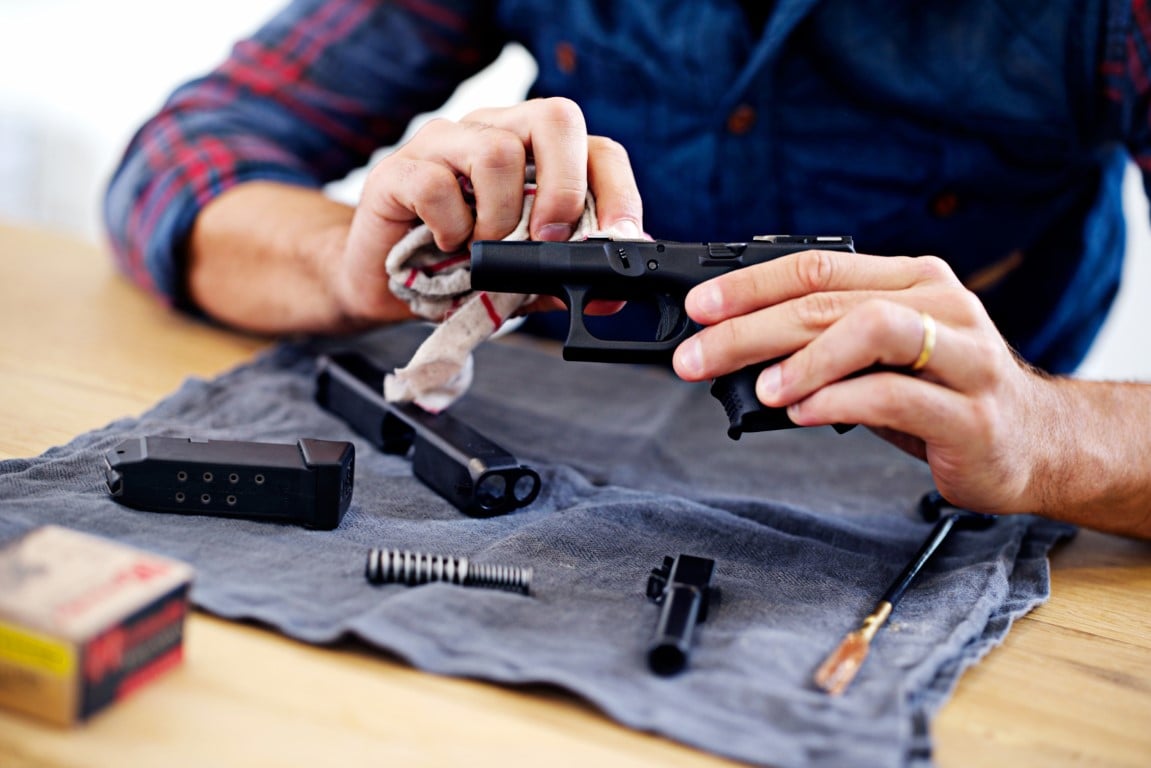
A: You can. I don’t. That’s because I break down and clean my firearms at home after every use. A quick cleaning at the range is no substitute for a thorough cleaning at home.