How to Choose Hunting Optics
Picking the spotting scope, binocular, and riflescope that work best for you depends mainly on the t
Robert Sadowski
• 10 min read
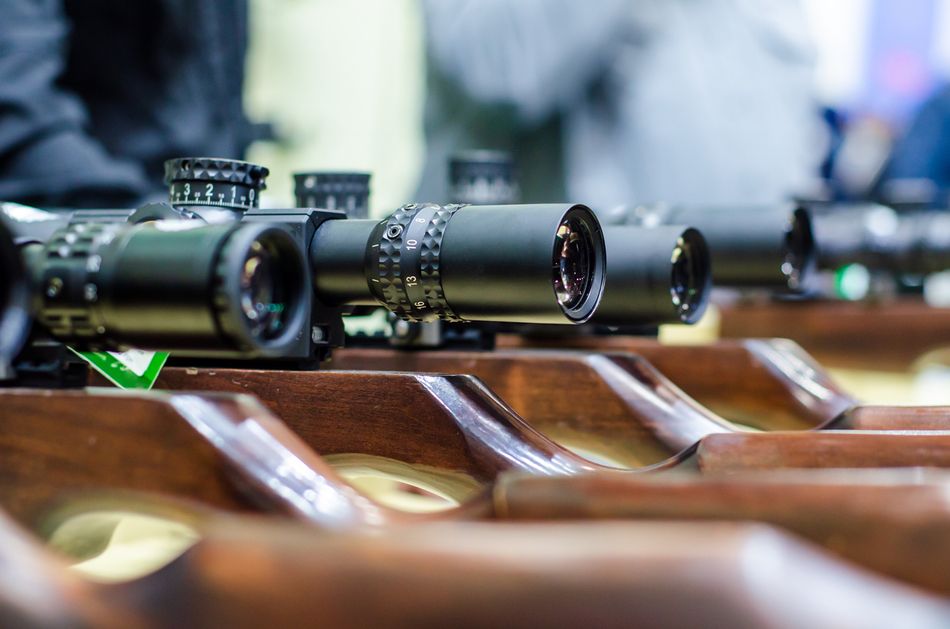
Hunting optics break down into two types: an optic to spot game—such as a spotting scope or binocular—and an optic that mounts to a bolt-action rifle, shotgun, handgun, or AR in order to take game. The best way to choose hunting optics is to match the optics to the game you are hunting. For instance, if you are hunting turkeys, a red-dot is the ticket. For deer and elk, a variable-power scope is best. Another consideration is cost. Most optics look the same on the outside, but the price can range from dirt-cheap budget models to lavishly expensive versions. Let’s take a look at the types of optics and how best to apply them to your hunting situation.
What Are Spotting Scopes Good For?
A spotting scope offers powerful magnification so you can spot a distant elk walking through aspens and fir on a mountain slope. In essence, a spotting scope lets your eyes do the walking in big country, which can save you miles of hiking in challenging terrain. Spotting scopes are also more comfortable to use over prolonged periods of time. Believe it or not, a pair of binoculars can feel like a concrete block when you are glassing for hours on end. A tripod is a necessary accessory. It steadies the spotting scope, allowing you to zoom in to really get a good look at the animal. All spotting scopes come threaded to use with a tripod.
What’s the Best Power for a Spotting Scope?
Generally speaking, a spotting scope with a 15–45X magnification range will cover most hunting scenarios—from elk in Colorado to whitetails in North Carolina beanfields. An objective lens of 60mm to 80mm is also a sweet spot. In my opinion, the perfect spotting scope offers high magnification, but is light enough to carry around all day.
Is a Spotting Scope Worth It?
If you are hunting in areas where there is a lot of open country, such as the sage plains of the mountain west, a spotting scope is a wise investment. The larger the objective lens, the larger the field of view. Image quality is where you will pay more. The better the image quality (meaning color and clarity), the higher the cost.
What Binocular Is Best for Hunting?
A good pair of binoculars can help you fill your tag and your freezer because they help you locate and view game from a distance. Hunting binoculars also gather light at dusk and dawn, making it easier for you to spot game at a time when the animals are most active.
Binoculars are compact and lightweight, and easily hang around your neck for instant access. While binoculars look simple, choosing a binocular for hunting can be confusing. There are two types: roof prisms and porro prisms. (See FAQs for more information on this.) Your best bet for a hunting binocular is a roof prism.
What Is the Best Magnification for a Hunting Binocular?
If you hunt dense woods such as those found in the East and Southeast, a binocular with 8X magnification is best. For hunting in more open areas—like the prairies, buttes, and plateaus out West—a 10X or 12X is a better choice. A 42mm objective lens is a good all-round choice. A larger objective lens on a hunting binocular makes it bulky and heavy. A smaller 32mm objective lens reduces weight and bulk, and is a good choice if you hunt from a treestand or blind.
Image Quality vs. Price
The goal of a hunting binocular is to allow you see a clear, crisp, and bright image of an animal that typically blends into the terrain. You will get better image quality (meaning vibrant colors and no distortion around the edges) with a more expensive binocular than with a less expensive model. My advice is to look through several makes at the store in order to compare them side-by-side. Make sure the binocular’s magnification dial rotates easily and the eye cups are comfortable to use, both with and without eyeglasses. You also want it to fit your hand and balance well, which is important if you intend to spend a lot of time looking through them. At some point, you will make the choice between image quality and price. It’s always a compromise, but if possible, err on the side of quality. You won’t regret it in the long run.
What to Look for in a Rifle Scope
When choosing a rifle scope, you need to pair the scope to the caliber. You don’t need a precision 1,000-yard scope on a rifle chambered in a caliber with a range of only 100 yards or so, such as with the straight-wall cartridge calibers used for deer hunting in certain states. Other considerations include magnification and reticle type. Traditionally, hunting scopes with a 3–9X magnification power range will suffice for most hunting situations. Scopes with this magnification range are ideal for bolt-action rifles where hunting distances range from 100 to 200 yards. If your shot will be at a longer range—say, 300 yards on antelope or elk—consider a magnification range of 12X or 14X.
If you hunt in a shotgun-only state, then your shots will be well under 100 yards. For shotgun deer hunting, a low-power scope with a 1–6X magnification is a good choice. If you hunt medium-size game with an AR-style rifle chambered in a thumper caliber—meaning a large, slow-moving bullet—a low-power scope is also the best option.
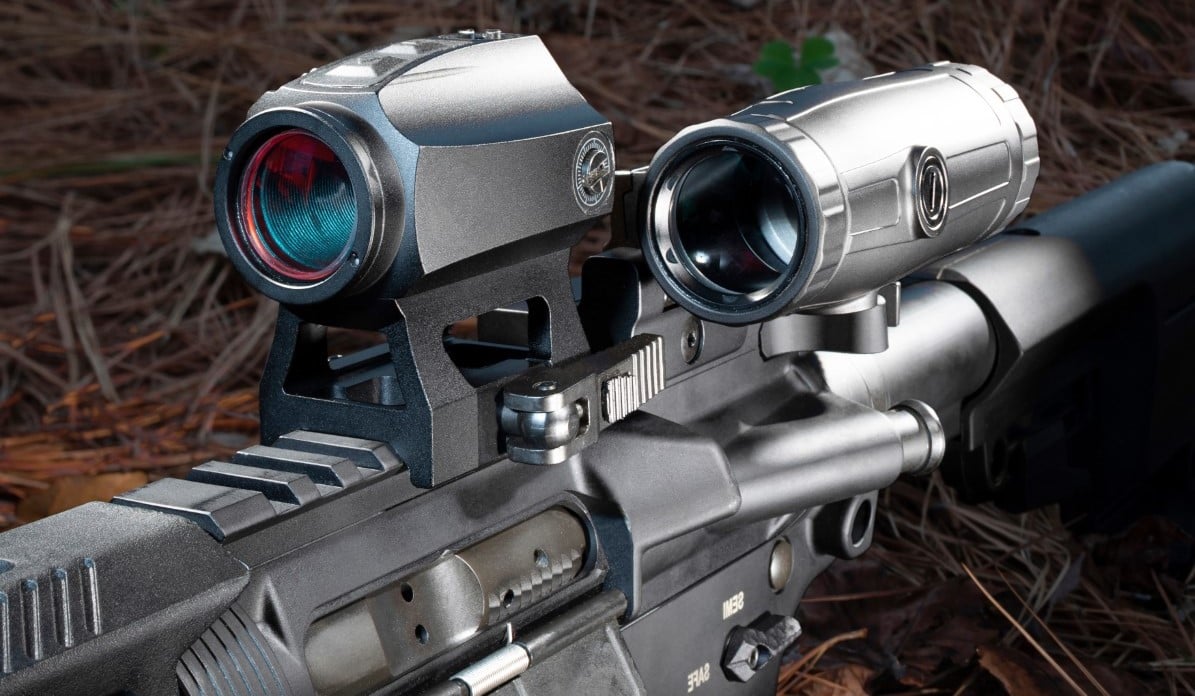
In such cases, a reflex sight optic might really be the best option. Reflex sights (aka red-dots) are excellent hunting optics for distances out to 100 yards. If you are running-and-gunning after strutting toms, a shotgun-mounted dot sight works well. The best handgun hunting scope is a lightweight model that offers extended eye relief (as a guard against sharp recoiling calibers). Best bets: either a 2X fixed-power or a 2–7X variable-power scope.
What About Reticles?
Reticles (commonly called crosshairs) can be as simple as duplex crosshairs or as complicated as a milliradian design appropriate for long-distance shots. In reality, reticles only seem complicated until you understand how to use them. For most hunting situations, a simple reticle is best. Many hunting scope reticles are illuminated, which helps in low-light conditions such as dawn and dusk.
Covered Turrets vs. Exposed Turrets
Traditional hunting rifle scopes have covered turrets. Typically, you sight-in your hunting rifle and never need to re-zero unless you change bullet weights. Exposed turrets are best suited to competition shooters, who have a need to tweak impact points depending on conditions.
Inexpensive Hunting Scopes
Good budget rifle scopes cost about $200 to $300. These scopes will allow you to harvest game and fill your tag, but if you want better image quality and more precision in a rugged and waterproof package, you will need to spend more.
Conclusion
Choosing the best hunting optics depends on what and where you hunt. Spotting scopes and binoculars condense the distance between you and game (and keep you undetected) while you decide whether to make a stalk or prepare to take a shot from a blind or treestand. The choice also depends on the platform—rifle, AR, shotgun, handgun—and the caliber.
FAQs
Q: What is the difference between roof prism and porro prism binoculars?
Without getting deeply technical, the inline prism design of a roof prism binocular allows the unit to not only be more compact and lighter than a porro prism, but also offers higher magnification. The prisms in a porro prism are set at an angle to each other. The design adds weight and bulk, but does offer a wider field of view. Typically, roof prisms are more expensive than porro prisms, but their compact design makes them a better choice for hunters.
Q: Which is better: a straight or angled spotting scope?
A: A spotting scope with an angled eyepiece is more comfortable to use sitting or standing and allows the tripod to sit lower for more comfortable viewing over longer periods of time. Angled eyepieces are not comfortable to use when you’re in a prone position. A straight eyepiece allows for quicker target acquisition and is easier to use when switching to binoculars. Straight eyepieces are also more comfortable to use while viewing from the prone position.
Q: What is the difference between an SFP reticle and an FFP reticle?
A: Traditionally, hunting scopes are equipped with SFP (second focal plane) reticles, which means the reticle stays the same size regardless of the power setting. With an FFP (first focal plane) reticle, the reticle increases or decreases in size as the magnification is increased or decreased. Because the reticle does not increase in size with an SFP scope, the reticle will not obscure the target, especially if the target is, say, a prairie dog. An FFP scope is best suited for long-range shooting with competitive precision rifles.